Research
I am particularly interested in high-energy astrophysical phenomena such as tidal disruption events. I also develop symbolic and numerical tools for the study of general relativity and strong-field gravity.
DPhil research Perturbation theory of the Milky Way.
My DPhil will focus on theoretical galactic dynamics. This project is supervised by Prof J Magorrian and is supported by the Jardine Foundation Postgraduate Scholarship. I will be working on the dynamics of stars in our local galaxy using perturbation theory.
Role of orbital inclination in loss cones Inclination diffusion cannot be ignored.
Stars in a galaxy sometimes get killed by a supermassive black hole at the centre. Whether a star is swallowed (captured) or torn apart (disrupted) by a spinning black hole depends on the orientation of its orbit because the spin creates a preferred direction. I showed that, when calculating the rates of such extreme events, we have to account for changes in orbital orientation due to stochastic stellar encounters.
Wenkang Xin. "Inclination Diffusion in Relativistic Loss Cones." (2026). arXiv:2608.16779.
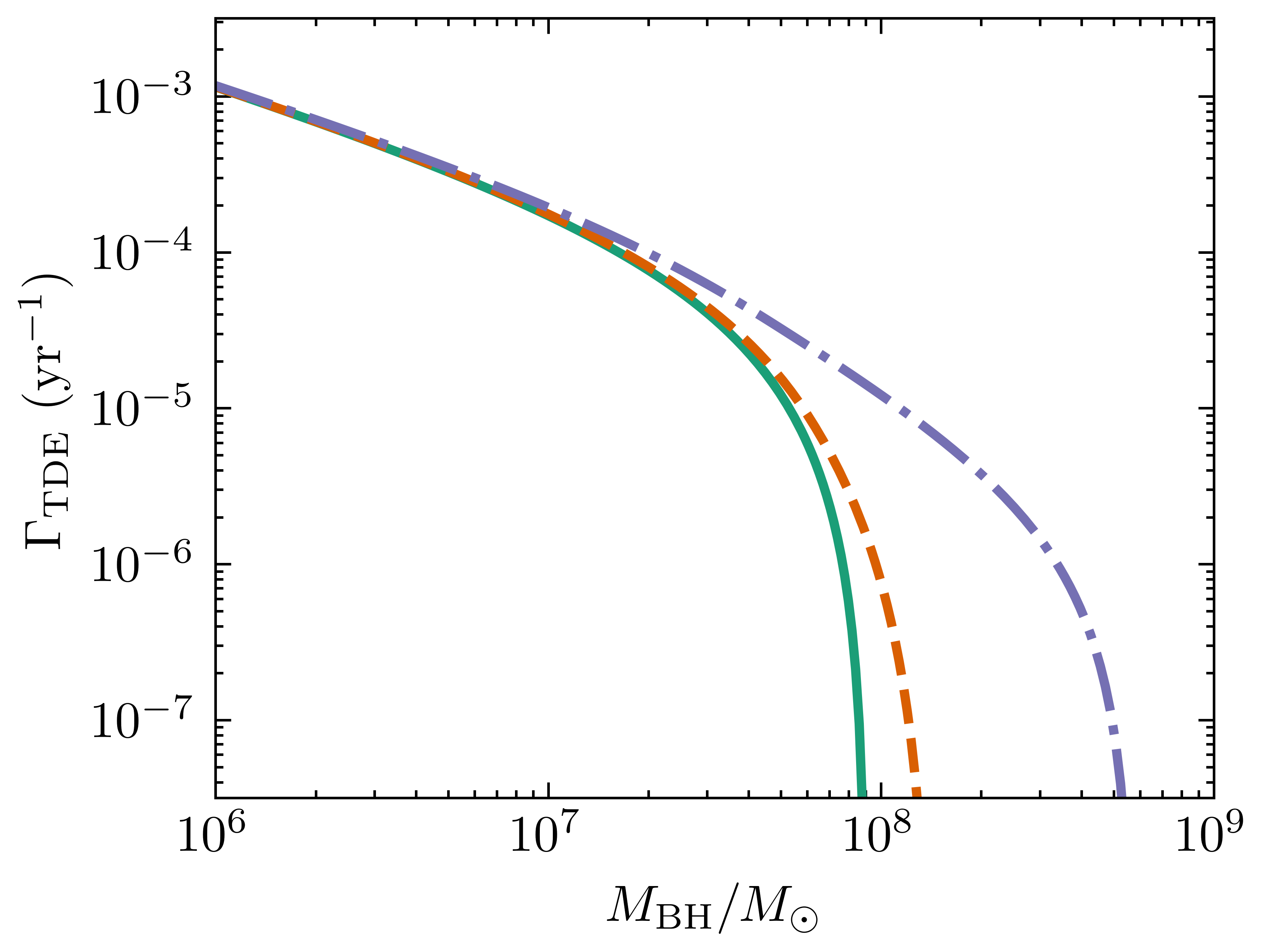
TDE rates around spinning black holes Two-dimensional loss-cone theory for TDEs.
As my MMathPhys dissertation, we developed a general analytic framework for tidal disruption event (TDE) rates in isotropic galaxies hosting spinning Kerr black holes. We formulated a loss cone theory that tracks the simultaneous diffusion of stars in both angular momentum magnitude and orientation. It was shown that a spinning black hole does not significantly change the overall TDE rate, but strongly affects the distribution of the orbital inclinations of disrupted stars.
This work is supervised by Prof J Binney. The project was conceived during the Dyson Fellows programme under Prof Binney and Dr Y B Ginat, where we learn about frontier research in galactic dynamics.
Wenkang Xin. "A Semi-Analytical Loss Cone Theory for Tidal Disruption Event Rates Around Kerr Black Holes." MMathPhys Dissertation (2026). arXiv:2606.18050.
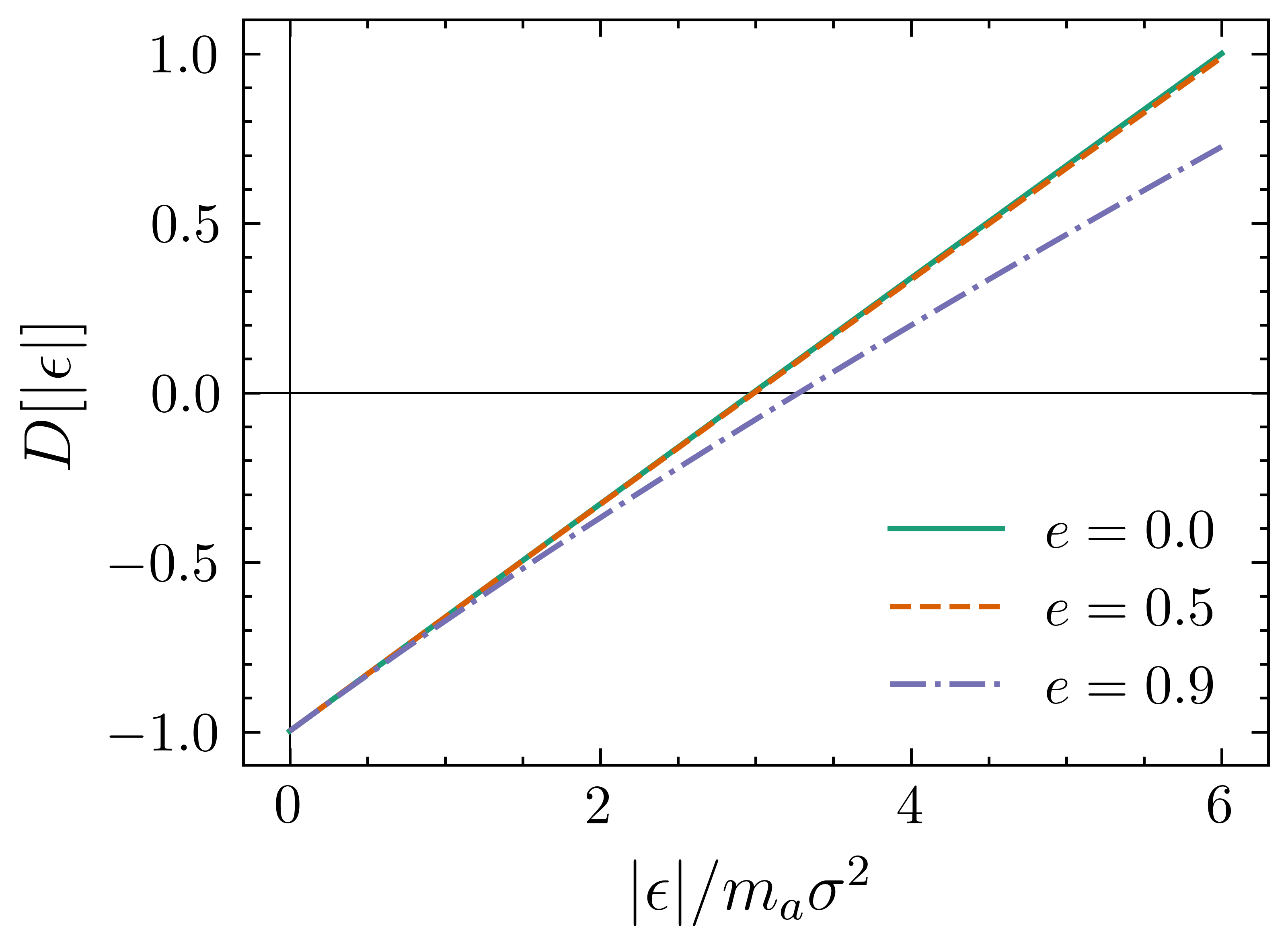
3-body dynamics and Heggie's law Extension of Heggie's law to eccentric binaries.
In the summer of 2025, I worked with Dr M Rozner under a summer internship at Institute of Astronomy, University of Cambridge. We generalised Heggie’s law to binaries with non-zero eccentricity and used numerical 3-body simulations to verify the theoretical predictions.
Wenkang Xin, Mor Rozner. "The soft side of hard binaries: Heggie's law with eccentricity." in prep (2025).
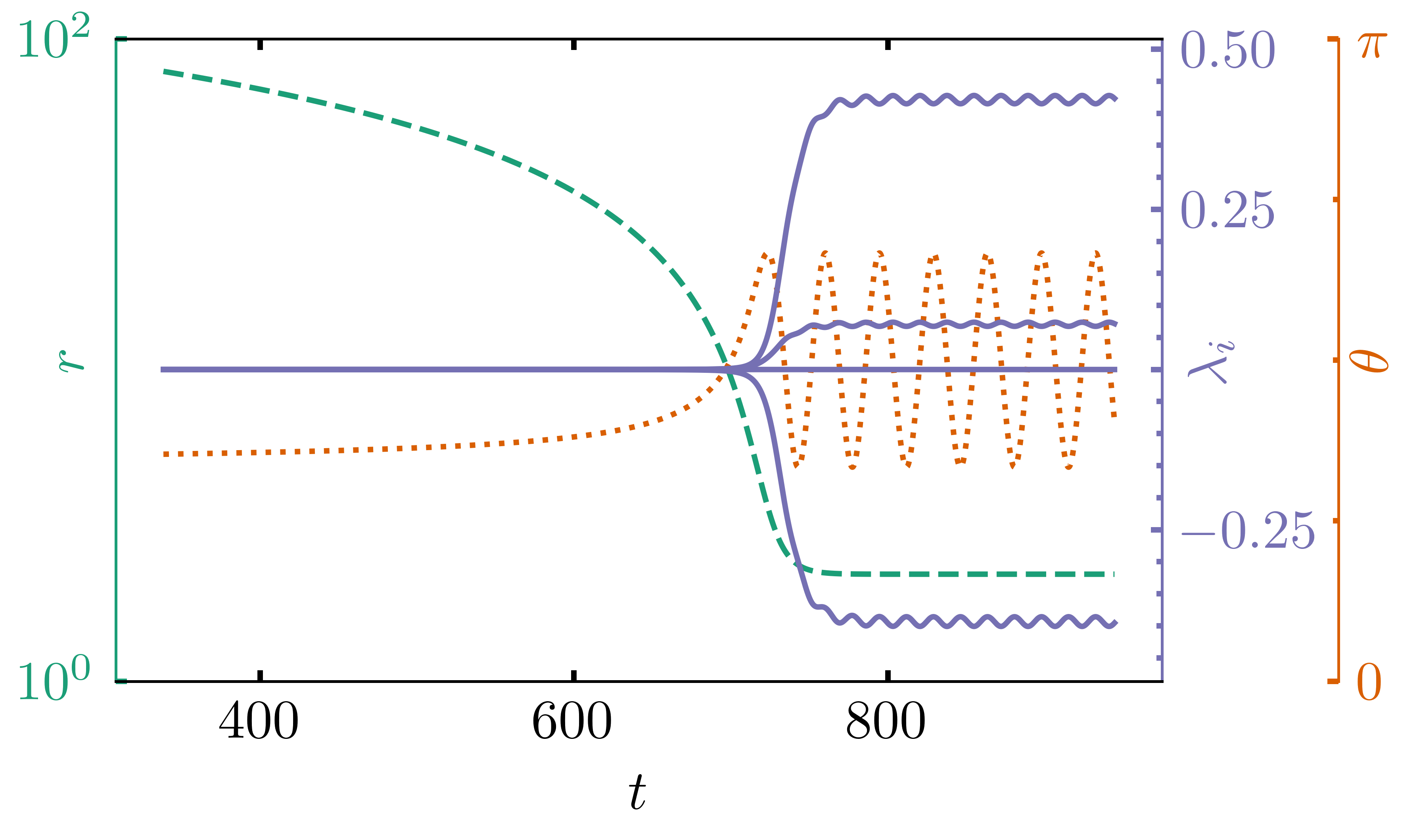
Relativistic tidal forces General analytic tidal tensor framework.
In the summer of 2024, I worked with Dr A Mummery under a summer internship at Oxford Theoretical Physics. We developed a general, analytic framework for computing the local tidal tensor along a time-like geodesic in any stationary, axisymmetric spacetime.
Wenkang Xin, Andrew Mummery. "The relativistic tidal tensor: General solutions for stationary axisymmetric spacetimes and the Hills mass of naked singularities." Physical Review D (2025). arXiv:2511.21499.